MyFitnessPal
About
Nutrition Apps
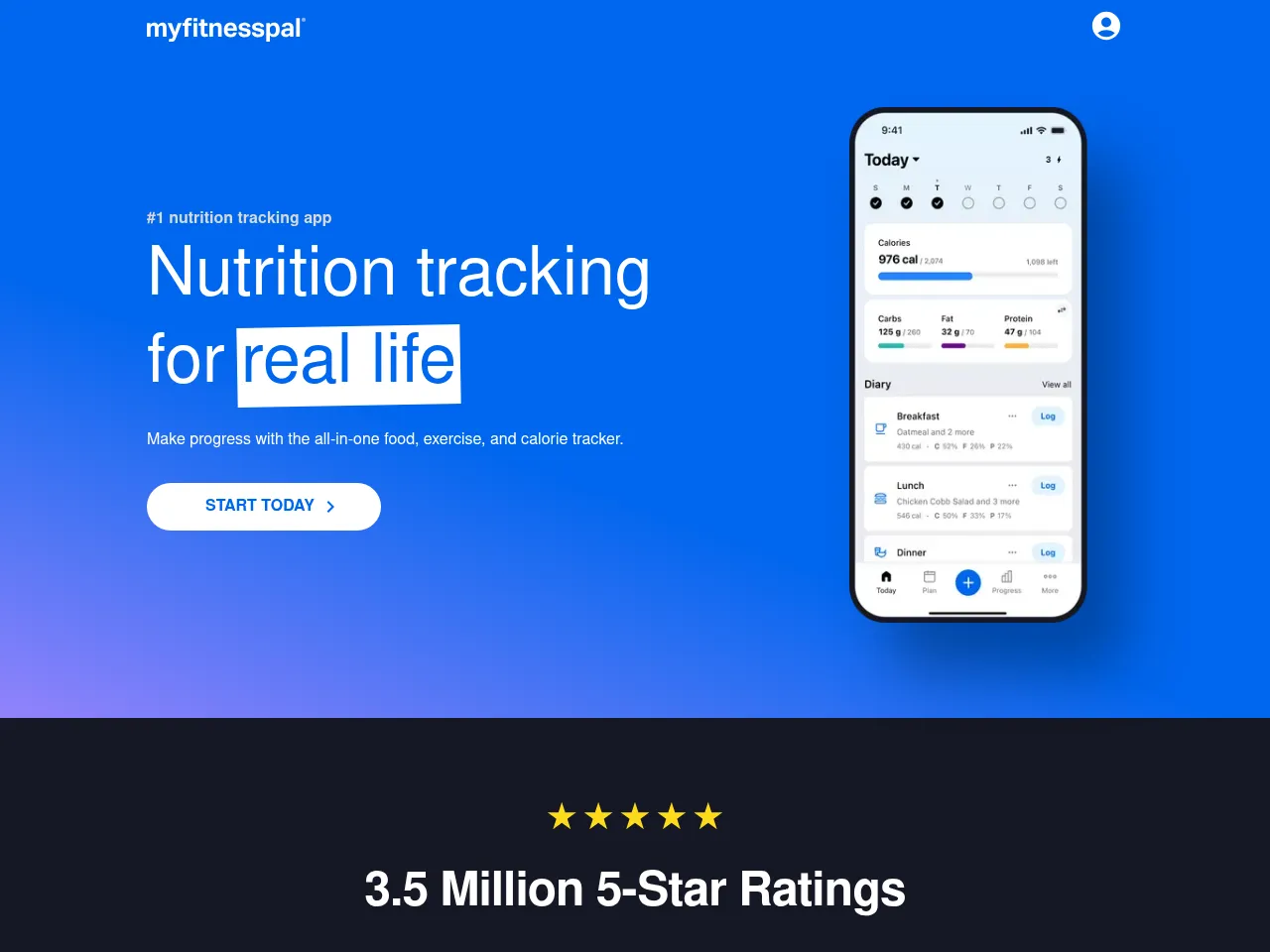
MyFitnessPal offers the world's largest food database with 14 million items, barcode scanning, macro tracking, recipe import, meal planning, and integration with fitness devices.
App Details
MyFitnessPal's greatest asset is its food database -- with over 14 million items and barcode scanning, logging meals is faster and more convenient than any competitor. The sheer breadth of foods, including restaurant items and brand-specific products, makes it practical for daily use in a way that apps with smaller databases cannot match. Macro and calorie tracking against personalized goals works well, and integration with fitness trackers from Garmin, Fitbit, Apple Health, and others provides a comprehensive picture of calories in versus calories out. Recipe import from URLs is a genuinely useful feature. However, the user-submitted food database can contain inaccurate entries, and the premium pricing feels steep for features that were previously free. As a fitness app, MyFitnessPal tracks exercise calories but does not provide workout programming. Health tracking is nutrition-centric rather than holistic. The multiple ownership changes have introduced some instability and feature churn. For calorie counting and macro tracking specifically, MyFitnessPal's database scale makes it the practical default.
 Powered by Rexiew